
THE SCIENCE
Your Brain
on Music
What happens in your brain and body when you listen to, create, or move to music? More than you might imagine! Music is one of the few human experiences that engages networks across nearly every region of the brain, connecting systems involved in emotion, memory, movement, language, attention, creativity, and reward. As we experience music through sound, rhythm, and vibration, our brains and bodies respond in remarkable ways, influencing everything from our heart rate and breathing to how we feel, think, move, and connect with others.
Whether we're listening, singing, playing, dancing, or creating music together, these interconnected responses help explain why music holds such promise for supporting learning, connection, and health and well-being from infancy to the end of life.
See how and where music engages these systems, then follow the timeline to learn how the role of music changes across a life. Along the way, reflect on your own relationship with music.
These illustrations are designed to be as scientifically accurate as possible while simplifying the brain's complex, three-dimensional structures and interconnected networks. They are intended to help explain key concepts rather than provide exact anatomical representations.

How Sound Moves
Through the Brain and Body
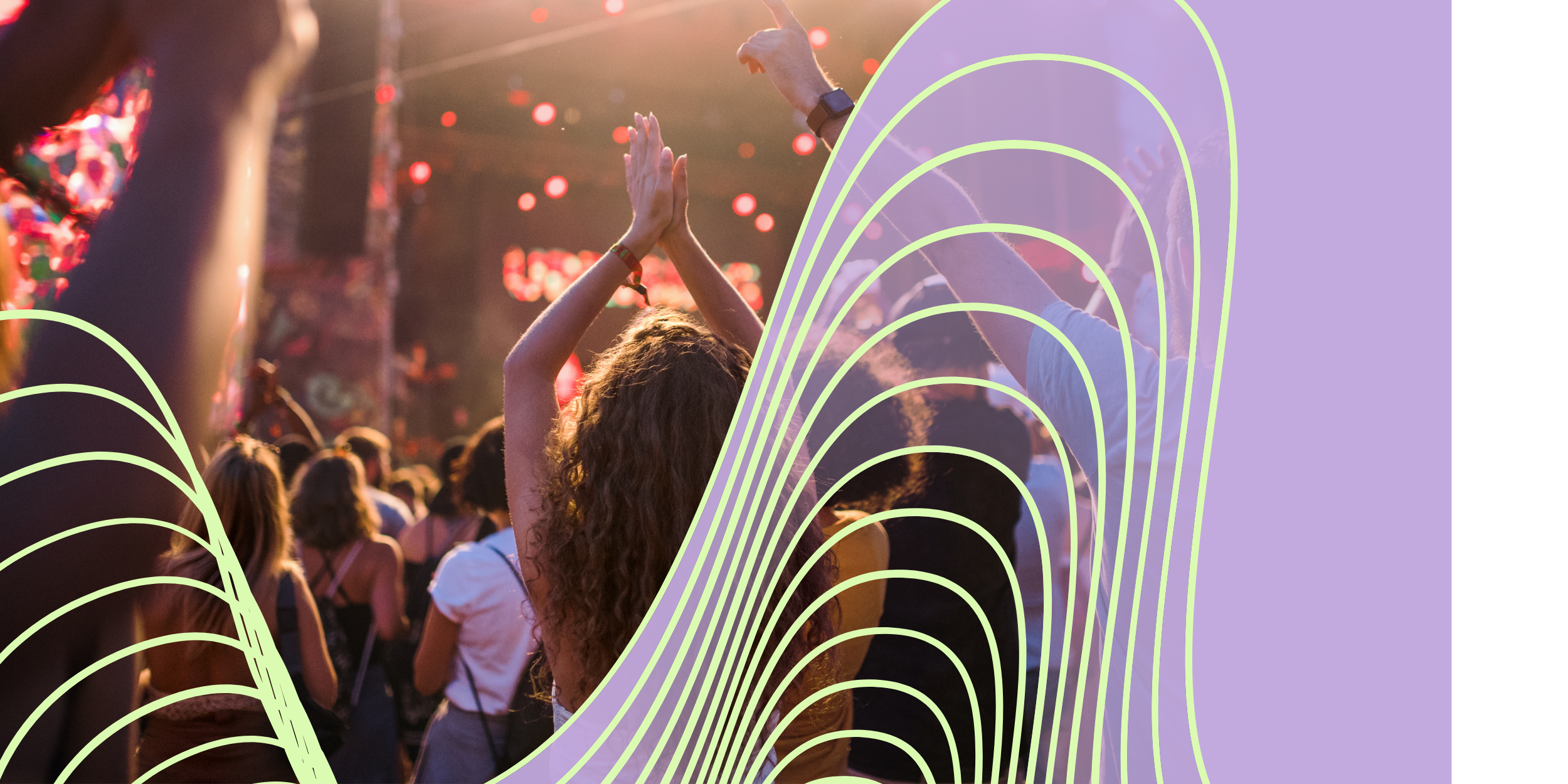
There’s something about going to a live show…
that lets me escape everything else for a while. Between the music, the bass vibrating through my body, the lights, and the energy of the crowd, I can completely lose myself in the moment…It’s one of the few times I’m not thinking about the stresses of everyday life.”
Maddie A.

Music Across a Lifetime
As we grow and change, so does the role music plays in our lives. Follow the phases below to discover how music supports us at every stage of life and through life’s challenges. Reflect on the role music has played in your life, the role it plays now, and how it might evolve in the future.
-
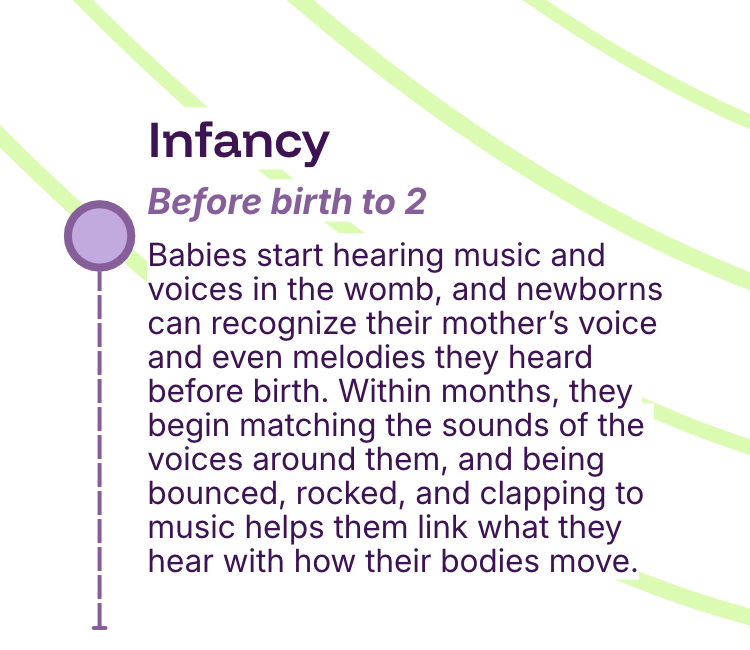
![Infancy developmental milestone graphic with sound wave lines, explaining how newborns distinguish between sound sources and match vocalizations to support early growth and development.]()
Music helps
Link sound, touch, and movement
MovementFeel calm and soothed
Emotions and well-beingPick out the sounds of words
Speech and languageBond with parents and caregivers
Connection to others
-
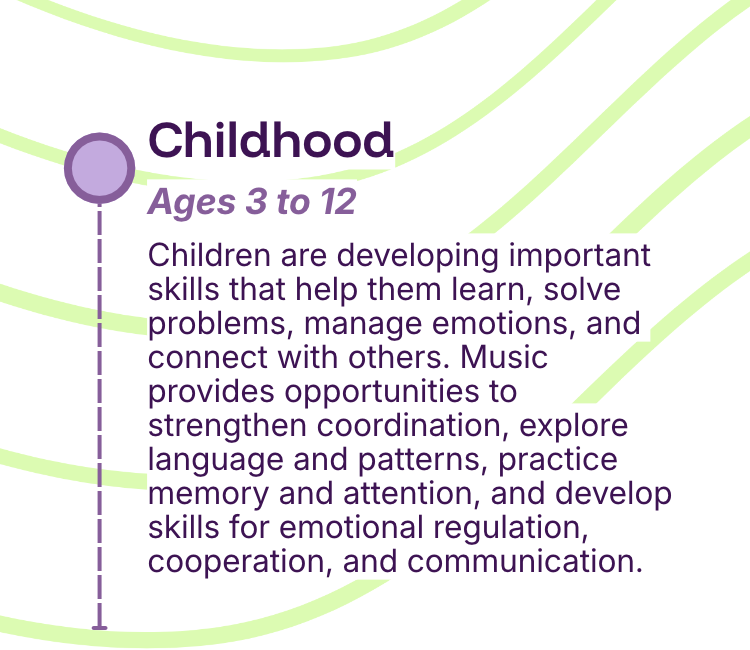
![Childhood developmental milestone graphic with sound wave lines, explaining how music supports motor skills, spatial awareness, concept development, and social interaction.]()
Music helps
Build coordination, balance, and spatial awareness
MovementUnderstand, express, and manage emotions
Emotions and well-beingLearn words, rhymes, speech patterns, and reading skills
Speech and languagePractice counting, memory, attention, and problem-solving
LearningCooperate, take turns, listen, and build friendships
-
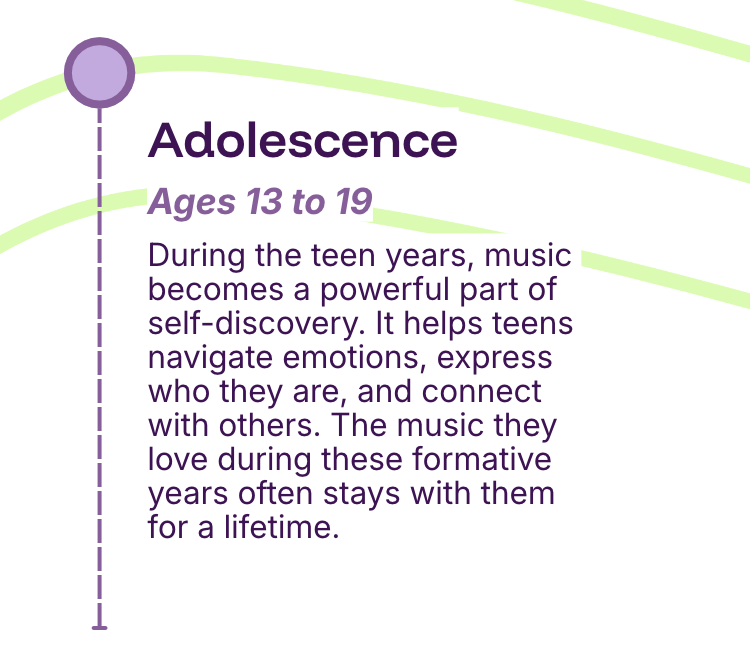
![Adolescence developmental milestone graphic with sound wave lines, highlighting how participation in choirs, bands, and dancing supports cooperation, motor skills, social interaction, cognitive development, and emotional well-being.]()
Music helps
Discover and express who you are
IdentityManage stress and emotions
Emotions and well-beingFind your people and feel connected
Connection to others
-
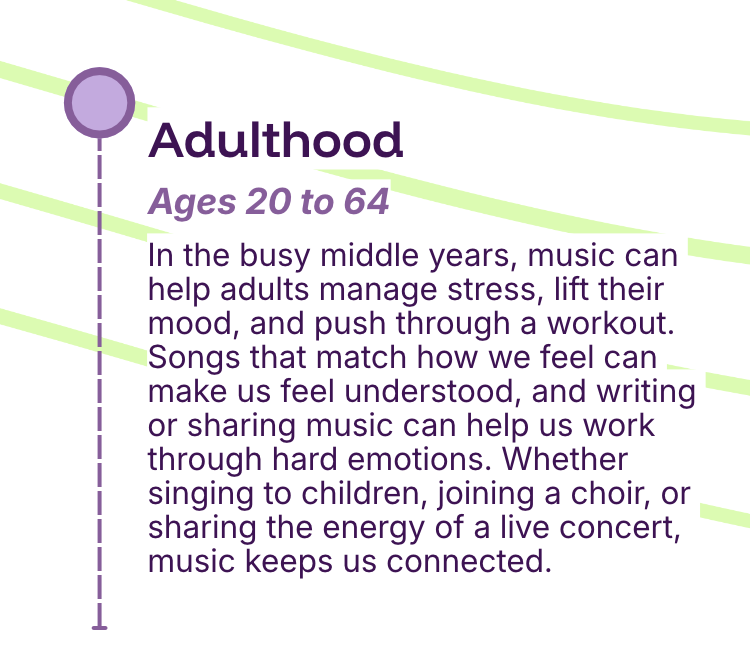
![Adulthood developmental milestone graphic with sound wave lines, highlighting how music supports emotional expression, validates personal experiences, and encourages emotional release through songwriting.]()
Music helps
Manage stress and lift mood
Emotions and well-beingExpress feelings and navigate life’s challenges
Emotions and well-beingStay energized and motivated to move
MovementKeep the mind engaged by learning something new
Build friendships and a sense of community
Connection to others
-
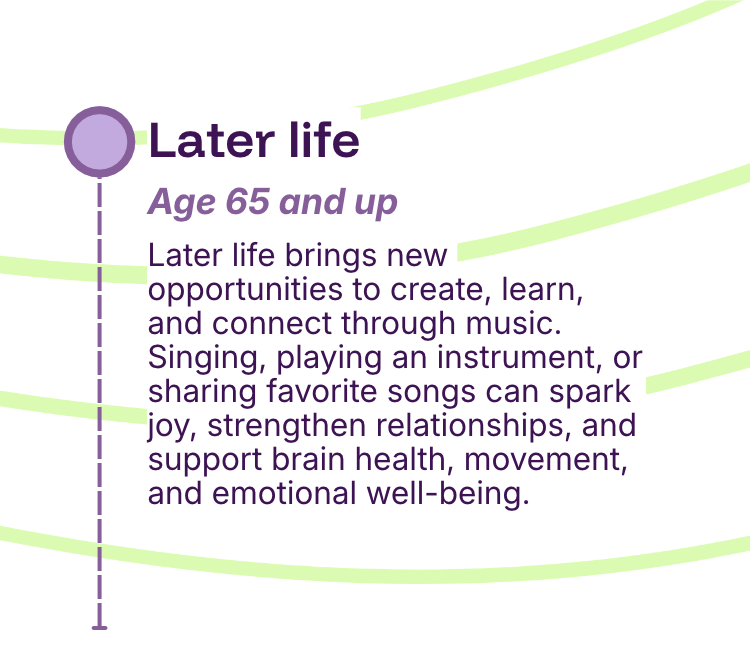
![Later life developmental milestone graphic with sound wave lines, highlighting how singing, playing instruments, and listening to music support enjoyment, self-expression, and community connection among older adults.]()
Music helps
Spark creativity and discovering new passions
LearningBring memories and meaningful moments to life
MemoriesStay physically active through dance, rhythm, and movement
MovementStay connected through friendship and community
Connection to others
-
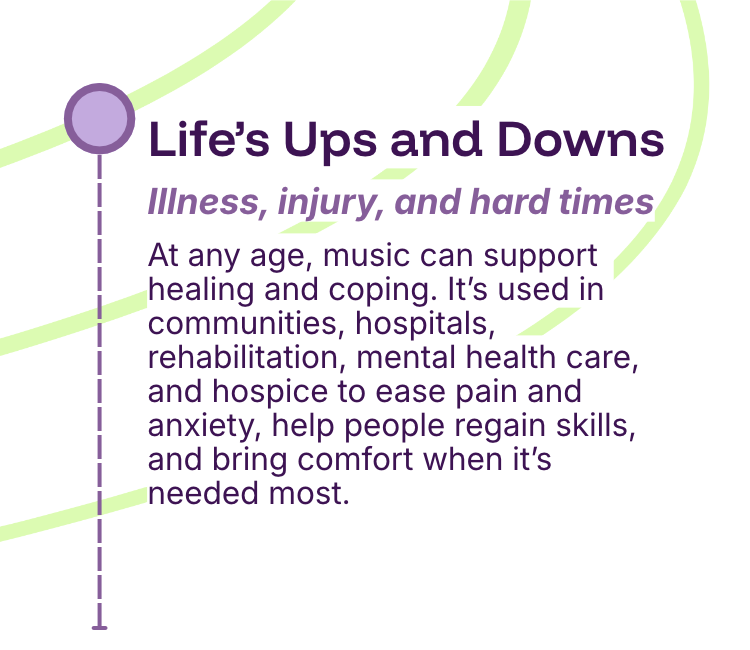
![End-of-life milestone graphic with sound wave lines, highlighting how music appreciation, participation, and learning remain accessible across all ages and stages of life.]()
Music helps
Ease pain, stress, and anxiety
Emotions and well-beingFeel connected and supported during loneliness
Connection to othersSupport emotional well-being and developing new coping skills
Emotions and well-beingImprove movement, speech, and everyday functioning
MovementConnect with loved ones
Connection to othersFind meaning, purpose, and peace
Emotions and well-being
FEATURING
From the Field
-

Economic Impact of Music Engagement
ALZHEIMER'S + DEMENTIA
When words become harder to find, music may offer people living with Alzheimer’s another way to express themselves and connect with others. This analysis translates those benefits into economic value to inform healthcare investment and policy.
-
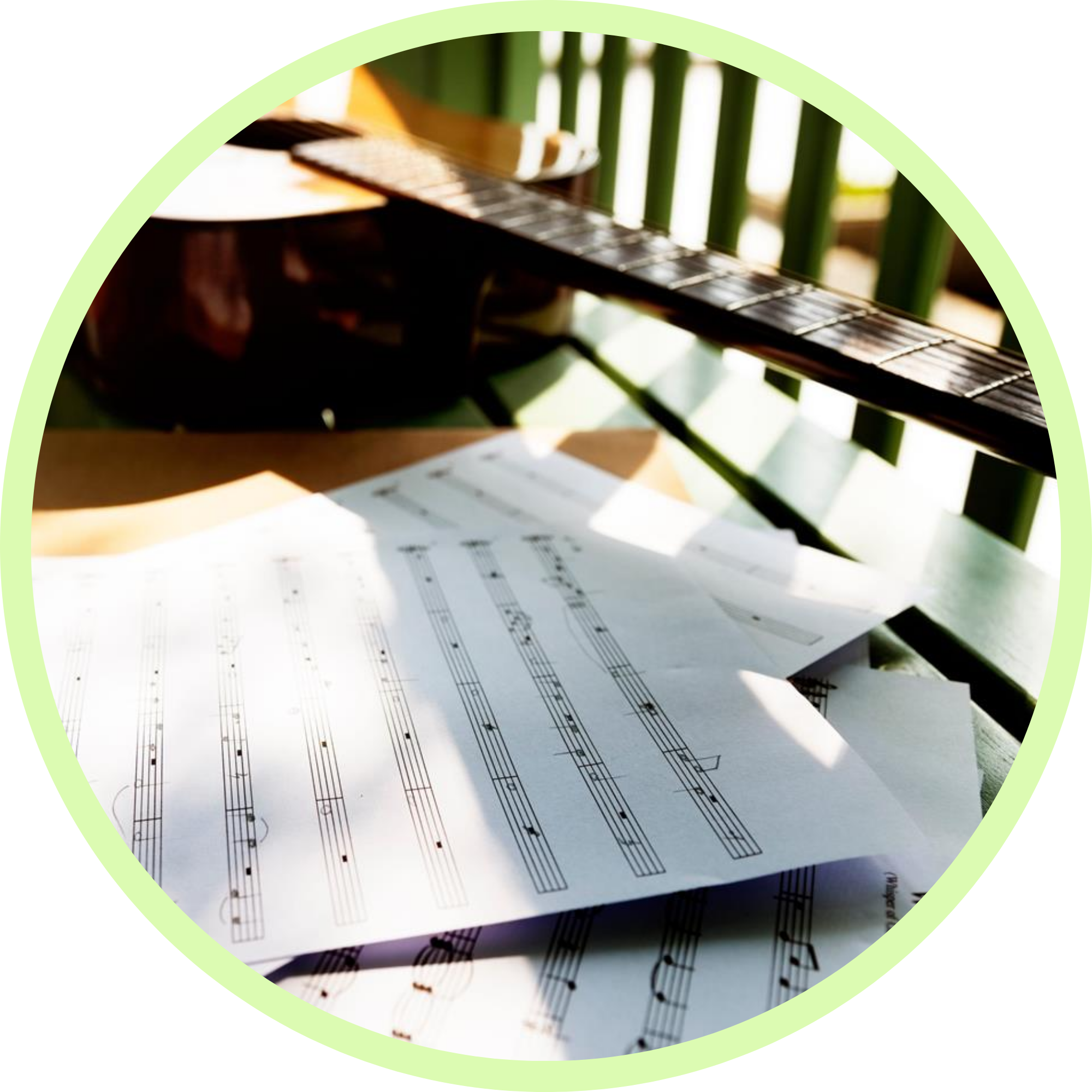
Songwriting for Cancer Survivors
ONCOLOGY
Building on research showing that music therapy can reduce anxiety in cancer survivors, Drexel researchers explored how therapeutic songwriting can help people express emotions, navigate relationships, strengthen their sense of self, and cope with everyday challenges.
-
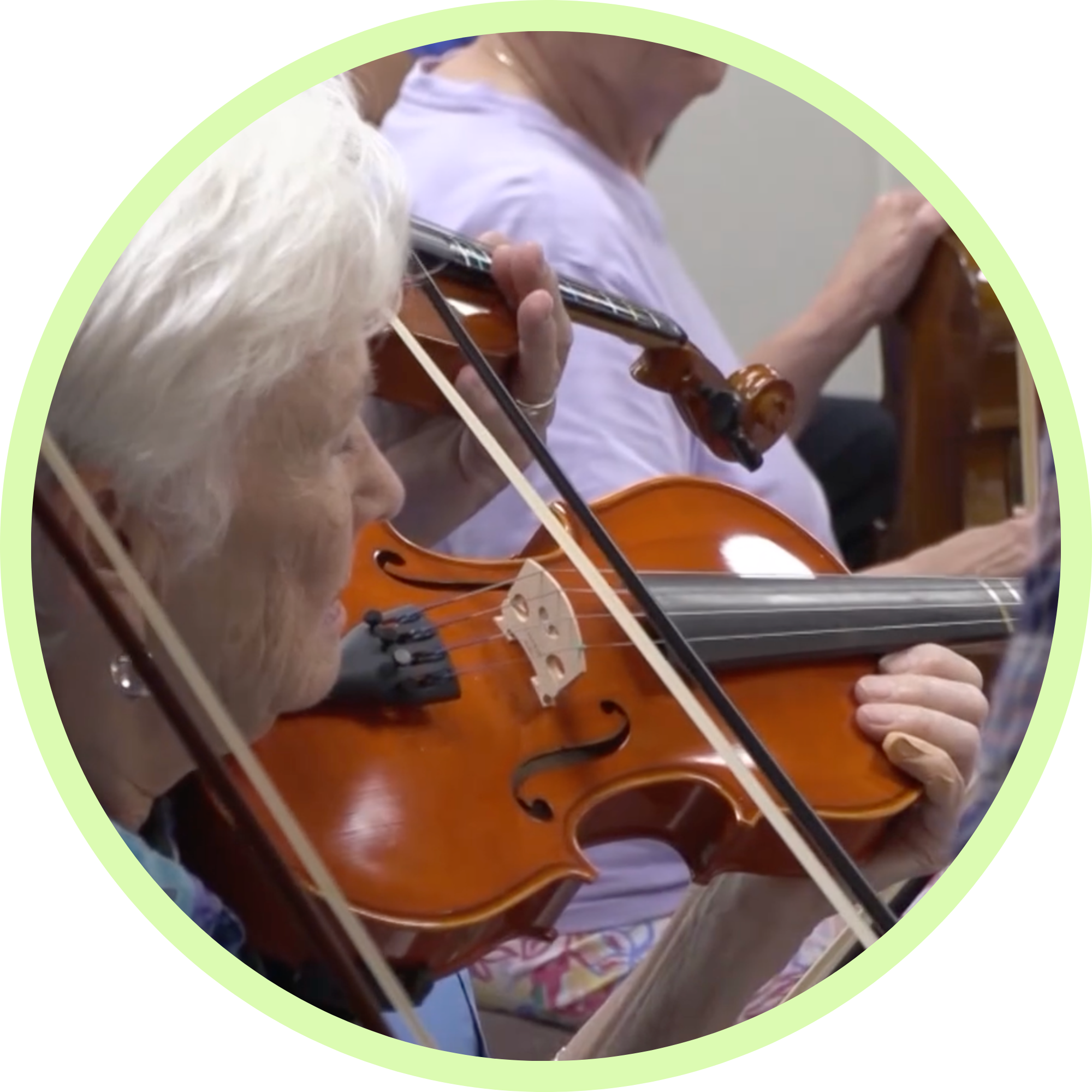
Music’s Impact as We Age
CREATIVE AGING
In Lexington, older adults are learning to play instruments through a partnership with the Lexington Philharmonic, the University of Kentucky, and the city. Older adults can learn to play musical instruments at any age, benefiting brain health, memory, and emotional well-being.
-
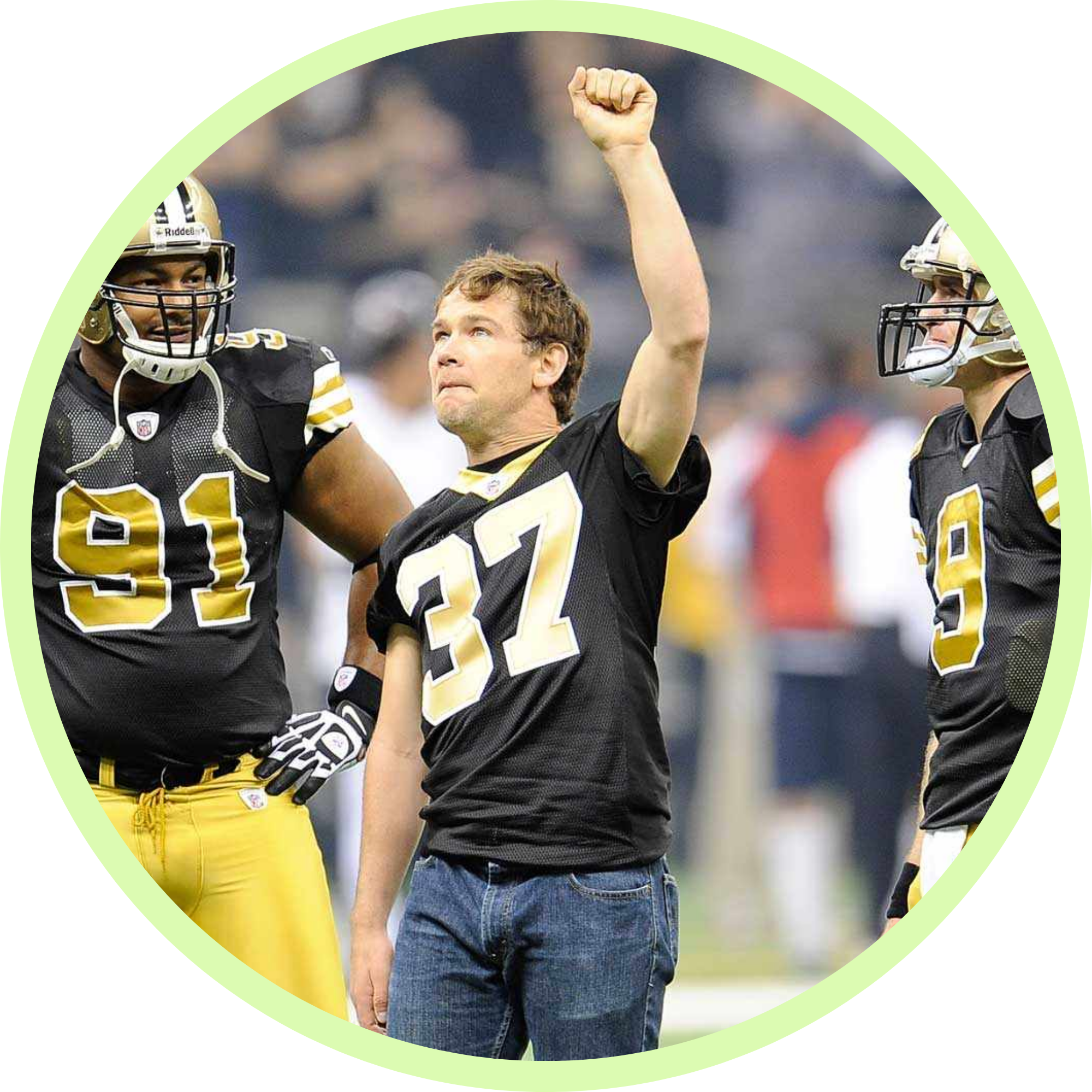
Communication Tech Innovations
ASSISTIVE TECHNOLOGY
Living with ALS, former New Orleans Saints player Steve Gleason uses technology-assisted songwriting to communicate and express emotions. His project, REBIRTH, shows how music can help when speech is no longer possible.
-
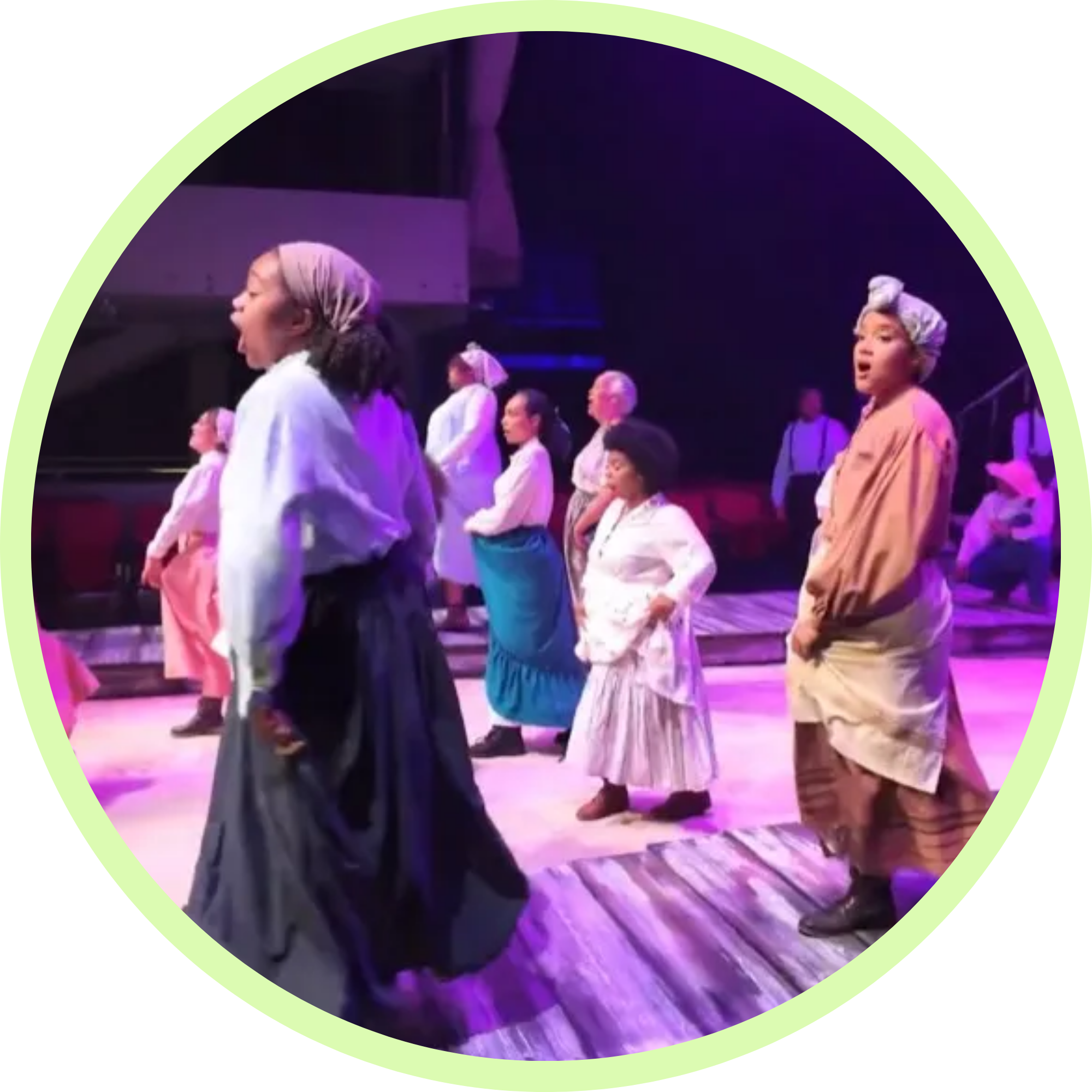
Healing with Harmony
HEALTH CARE PROFESSIONALS
The AdventHealth and Opera Orlando bring together more than 70 physicians, nurses, and other team members to make music, foster connection, and support well-being. They also perform for audiences, sharing the gift of the music they create together.
-
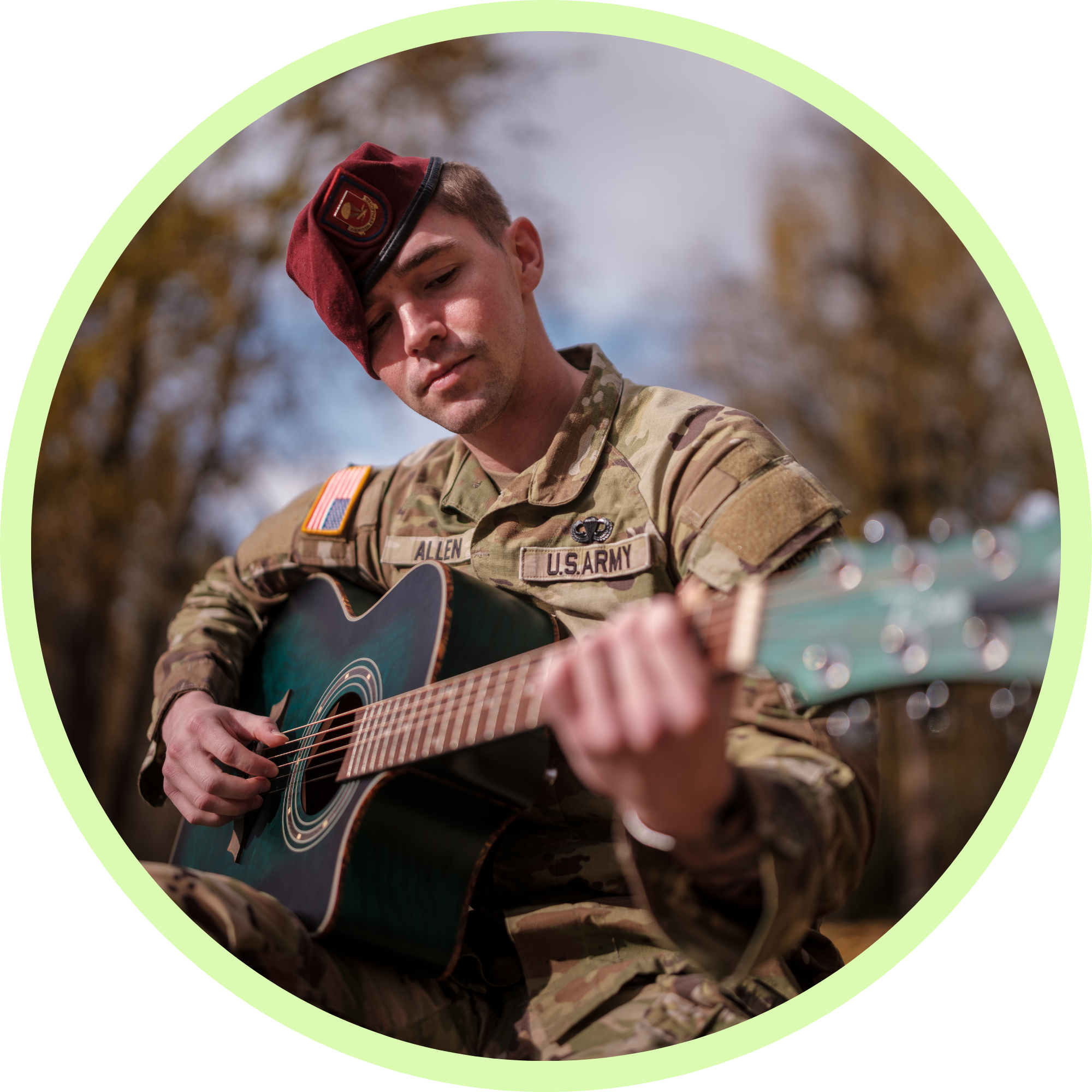
Music Therapy for Trauma
MILITARY
Therapeutic music experiences can help process difficult experiences, express emotions, build connections, and support recovery. Discover how Creative Forces: NEA Military Healing Arts Network and Project: Music Heals Us are using music to support military communities.
Research + Resources
-
-
Music and Military – Berklee REMIX
from Berklee Music and Health Institute Research Collection
housed in the Research and Information Exchange (Berklee REMIX)Creative Forces® – The National Endowment for the Arts
An initiative in partnership with the U.S. Department of War and Department of Veterans Affairs that seeks to improve the health, well-being, and quality of life for military and veteran populations exposed to trauma, as well as their families and caregivers. -
Music and Cancer – Berklee REMIX
from Berklee Music and Health Institute Research Collection
housed in the Research and Information Exchange (Berklee REMIX)Walther Supportive Oncology / Music Interventions Lab – Indiana University School of Medicine: Directed by Dr. Sheri Robb. Focuses on pediatric oncology research, standardized intervention reporting guidelines, and behavioral health outcomes.
Arts + Health Lab & MET-Lab – Drexel University
Directed by Dr. Joke Bradt; leading center for randomized controlled trials (RCTs) investigating music therapy mechanisms for chronic pain, oncology, and neurorehabilitation. -
Music and Mental Health – Berklee REMIX
from Berklee Music and Health Institute Research Collection
housed in the Research and Information Exchange (Berklee REMIX)The Music, Brain & Health Lab – Stanford University: Conducts basic neuroscience on musical affect/reward pathways and applied clinical research developing Standardized Adaptable Music Medicines (STAMMs) and combining music with Neuromodulation/TMS.
-
Music and Neurodegenerative Disorders – Berklee REMIX
from Berklee Music and Health Institute Research Collection
housed in the Research and Information Exchange (Berklee REMIX)Music, Imaging, and Neural Dynamics (MIND) Lab – Northeastern University
Directed by Dr. Psyche Loui; focuses on structural/functional brain connectivity, music perception, emotion, and neurodevelopmental applications.UCSF Memory and Aging Center / Sound Health Network – University of California, San Francisco
Led by Dr. Charles Limb (auditory neurosurgery and jazz improvisation neuroscience) and home to clinical research on music interventions for neurodegenerative diseases and cognitive resilience.Music & Dementia Research Network
Multi-center network focused on music interventions for cognitive decline and Alzheimer's disease.Johns Hopkins Center for Music and Medicine
Co-directed by Dr. Alexander Pantelyat; conducts clinical trials on music/rhythm therapies for Parkinson's, stroke, and dystonia. -
Music and Pain – Berklee REMIX
from Berklee Music and Health Institute Research Collection
housed in the Research and Information Exchange (Berklee REMIX)Music4Pain Network
NIH/NEA-supported research network clarifying neurobiological mechanisms of music for pain management.Audio Analgesia Research Network
Investigates neural mechanisms and technology of sound-driven pain reduction.ENSEMBLE Network
NIH/NEA-supported collaborative mapping mechanistic pathways of music-based pain care.Music, Creativity, and Wellness Lab – Drexel University
Directed by Dr. Joke Bradt; leading center for randomized controlled trials (RCTs) investigating music therapy mechanisms for chronic pain, oncology, and neurorehabilitation. -
Music and Stoke – Berklee REMIX
from Berklee Music and Health Institute Research Collection
housed in the Research and Information Exchange (Berklee REMIX)Music and Neuroimaging Laboratory – Harvard Medical School / BIDMC
Directed by Dr. Gottfried Schlaug; pioneering work on neuroplasticity, musical expertise, and melodic intonation therapy for stroke recovery.Johns Hopkins Center for Music and Medicine
Co-directed by Dr. Alexander Pantelyat; conducts clinical trials on music/rhythm therapies for Parkinson's, stroke, and dystonia.BRAMS (Brain, Music, and Sound Research Laboratory): Joint Montreal-based facility (Université de Montréal & McGill) dedicated to auditory neuroscience, motor control, and amusia.
-
Music and Substance Use and Abuse – Berklee REMIX
from Berklee Music and Health Institute Research Collection
housed in the Research and Information Exchange (Berklee REMIX)Music, Creativity, and Wellness Lab – Drexel University
Directed by Dr. Joke Bradt; leading center for randomized controlled trials (RCTs) investigating music therapy mechanisms for chronic pain, oncology, and neurorehabilitation. -
Music and Traumatic Brain Injury – Berklee REMIX
from Berklee Music and Health Institute Research Collection
housed in the Research and Information Exchange (Berklee REMIX)Creative Forces® – The National Endowment for the Arts
An initiative in partnership with the U.S. Department of War and Department of Veterans Affairs that seeks to improve the health, well-being, and quality of life for military and veteran populations exposed to trauma, as well as their families and caregivers.BRAMS (Brain, Music, and Sound Research Laboratory): Joint Montreal-based facility (Université de Montréal & McGill) dedicated to auditory neuroscience, motor control, and amusia.
Music, Creativity, and Wellness Lab – Drexel University
Directed by Dr. Joke Bradt; leading center for randomized controlled trials (RCTs) investigating music therapy mechanisms for chronic pain, oncology, and neurorehabilitation. -
Berklee Music and Health Institute (BMHI)
A field-building hub connecting research, practice, education, technology, and policy across music and health. Rather than a traditional academic lab, the Institute builds infrastructure for the field through evidence translation, its open-access Research Repository and Taxonomy, cross-sector partnerships, workforce development, community programs, and music-based innovation.The Music, Brain & Health Lab – Stanford University
Conducts basic neuroscience on musical affect/reward pathways and applied clinical research developing Standardized Adaptable Music Medicines (STAMMs) and combining music with Neuromodulation/TMS.Center for Arts in Medicine – University of Florida
A leading research center focusing on social prescribing, public health policy, and large-scale population health studies in partnership with global initiatives like the Jameel Arts & Health Lab.Walther Supportive Oncology / Music Interventions Lab – Indiana University School of Medicine
Directed by Dr. Sheri Robb. Focuses on pediatric oncology research, standardized intervention reporting guidelines, and behavioral health outcomes.Brain and Creativity Institute (BCI) – University of Southern California (USC)
Directed by Drs. Antonio Damasio, Hanna Damasio, and Assal Habibi. Investigates how music training affects child neurodevelopment, emotional regulation, and brain connectivity.UCSF Memory and Aging Center / Sound Health Network – University of California, San Francisco
Led by Dr. Charles Limb (auditory neurosurgery and jazz improvisation neuroscience) and home to clinical research on music interventions for neurodegenerative diseases and cognitive resilience.Auditory Neuroscience Laboratory (Brainvolts) – Northwestern University
Directed by Dr. Nina Kraus. A leading lab mapping biological auditory processing, neuroplasticity, language acquisition, and sound-based clinical markers.Music Mind and Brain Lab – Indiana University Bloomington
Investigates pitch perception, rhythmic entrainment, musical memory, and computational models of music cognition.Music, Creativity, and Wellness Lab – Drexel University
Directed by Dr. Joke Bradt; leading center for randomized controlled trials (RCTs) investigating music therapy mechanisms for chronic pain, oncology, and neurorehabilitation.Music, Imaging, and Neural Dynamics (MIND) Lab – Northeastern University
Directed by Dr. Psyche Loui; focuses on structural/functional brain connectivity, music perception, emotion, and neurodevelopmental applications.Vanderbilt Music Cognition Lab – Vanderbilt University Medical Center
Directed by Dr. Reyna Gordon; focuses on rhythm, language acquisition, genetics, and social communication.Music and Neuroimaging Laboratory – Harvard Medical School / BIDMC
Directed by Dr. Gottfried Schlaug; pioneering work on neuroplasticity, musical expertise, and melodic intonation therapy for stroke recovery.McMaster Institute for Music and the Mind (LIVELab) – McMaster University
Investigates developmental music neuroscience, rhythm perception, and multi-brain interaction during live performance.
BRAMS (Brain, Music, and Sound Research Laboratory)
Joint Montreal-based facility (Université de Montréal & McGill) dedicated to auditory neuroscience, motor control, and amusia.International Arts + Mind Lab (IAM Lab) – Johns Hopkins University
Center for Applied Neuroaesthetics utilizing the "Impact Thinking" translational framework.Johns Hopkins Center for Music and Medicine
Co-directed by Dr. Alexander Pantelyat; conducts clinical trials on music/rhythm therapies for Parkinson's, stroke, and dystonia.
-
NeuroArts Blueprint
Joint initiative by Johns Hopkins International Arts + Mind Lab and the Aspen Institute building a global framework for arts, science, and health.Music4Pain Network
NIH/NEA-supported research network clarifying neurobiological mechanisms of music for pain management.
Audio Analgesia Research Network
Investigates neural mechanisms and technology of sound-driven pain reduction.Music & Dementia Research Network
Multi-center network focused on music interventions for cognitive decline and Alzheimer's disease.ENSEMBLE Network
NIH/NEA-supported collaborative mapping mechanistic pathways of music-based pain care.Sound Health Network (SHN)
National clearinghouse operated via NEA, UCSF, NIH, and Kennedy Center partnership.Jameel Arts & Health Lab
Established in partnership with the World Health Organization (WHO), NYU Steinhardt, Community Jameel, and Culturunners. Serves as a global coordinator measuring, driving, and scaling research into arts-and-music-based health interventions, focusing on health equity, global policy integration, and implementation science in underserved populations worldwide.
-
International Association for Music & Medicine (IAMM)
Global organization publishing the journal Music and Medicine.Society for Music Perception and Cognition (SMPC)
Primary academic organization for music cognition and neuroscience.European Society for the Cognitive Sciences of Music (ESCOM)
International society supporting music cognition and neurosciences.Institute for Music and Neurologic Function (IMNF)
Applied research and clinical center for neurologic restoration.Neurologic Music Therapy Services International (NMT Academy)
Standardized clinical training and research network for NMT protocols.American Music Therapy Association dedicated to advancing public awareness, supporting clinical research, and providing education and advocacy for professional music therapy
-
Your Brain on Art: How the Arts Transform Us
Susan Magsamen & Ivy Ross
Introduces neuroaesthetics and practical applications of arts-based interventions for neural plastic change, trauma recovery, and public health.Arts in Health: Designing and Researched Interventions
Daisy Fancourt
Definitive academic text mapping methodology, epidemiological frameworks, and public health policy for arts-and-music health interventions.Reverberation: Do Everything Better with Music
Keith Blanchard (Foreword by Peter Gabriel)
Explores practical applications of music neuroscience for cognitive performance, mood regulation, pain management, and athletic performance.The Oxford Handbook of Music and the Brain
Hodges & Thaut (Eds.)
Comprehensive textbook mapping sensory processing, motor control, memory, and clinical translation.Handbook of Neurologic Music Therapy
Michael H. Thaut & Volker Hoemberg
Gold standard text for evidence-based clinical protocols in neurorehabilitation.Music, Language, and the Brain
Aniruddh D. Patel
Foundation text examining structural and neural overlaps between musical syntax and language.This Is Your Brain on Music
Daniel J. Levitin
Accessible introductory reading for underlying neural auditory mechanics and cognitive psychology.Musicophilia: Tales of Music and the Brain
Oliver Sacks
Clinical case studies highlighting neurological conditions, musical hallucinations, amusia, and motor recovery.